FBR Digital Invoicing Software
FBR-integrated e-invoicing that reports every sales tax invoice in real time, with the FBR invoice number and QR code printed on it
Digital invoicing software that connects your business to FBR's Digital Invoicing system - every sales tax invoice validated and reported the moment it's issued, and printed with its FBR invoice number and QR code, from the ERP you already use or from our ready software.
- Real-time - Invoices reported to FBR
- QR + FBR No. - On every printed invoice
- Your ERP - Or our ready software
This is for you if
- You're registered for sales tax and FBR now requires your invoices to be issued digitally
- Your invoices come out of an ERP, POS or accounting system with no FBR connection
- Your team keys sales invoices into the sales tax return by hand every month
- You've received an FBR notice about digital invoicing and need to be live quickly
An invoice FBR never received is now a compliance problem, not a paperwork one
FBR's Digital Invoicing system expects each sales tax invoice to be reported electronically as it is issued, and to carry the FBR invoice number and QR code that prove it was. Most businesses still invoice from software that was never built for that - an ERP with no API connection, a desktop billing tool, or a spreadsheet. Getting compliant means connecting that system to FBR's API, mapping your products to the right HS codes, rates and units, passing FBR's sandbox scenarios, and handling the day an invoice is rejected - all without stopping the business from billing. That is the work we do.
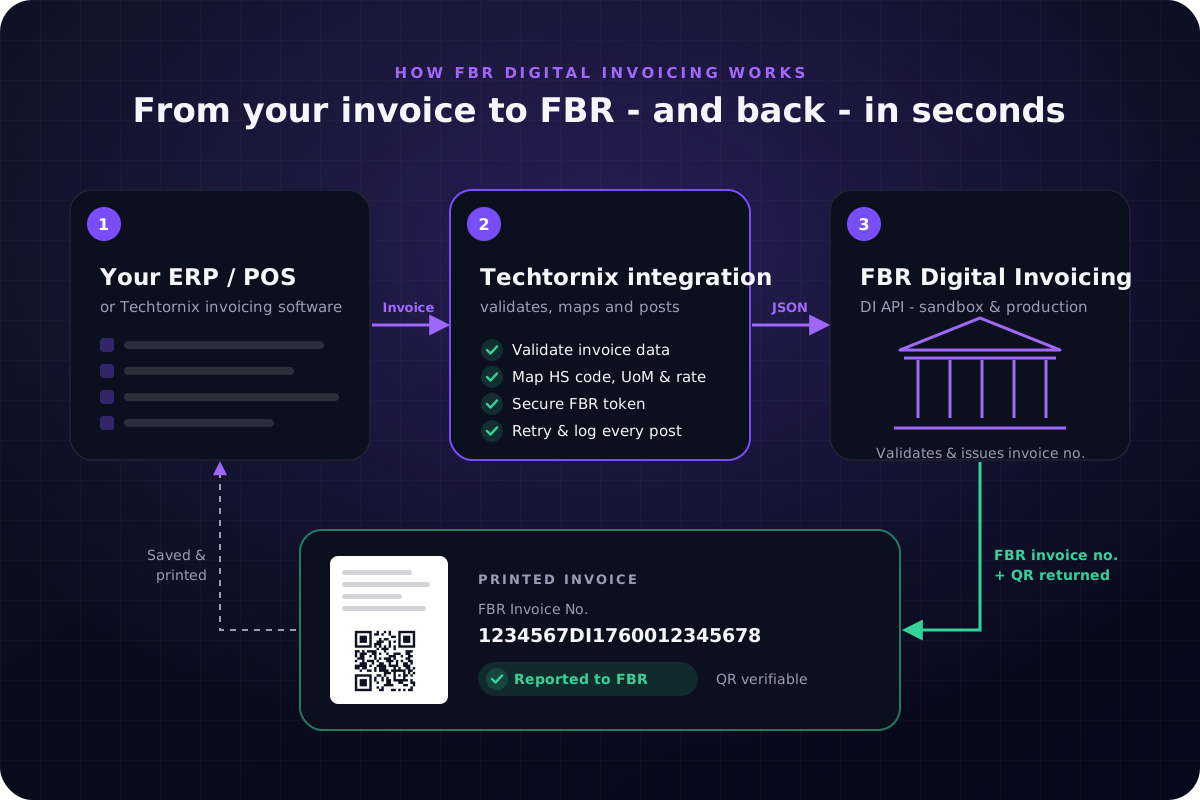
From your invoice to FBR - and back - in seconds
The moment an invoice is saved, it is checked against FBR's rules and posted to the Digital Invoicing API. FBR validates it and returns a unique FBR invoice number, which is stored against the invoice and printed with its QR code. Your team keeps billing exactly as before.
- Invoice created in your ERP, POS or our software
- Validated, mapped and posted to FBR's Digital Invoicing API
- FBR invoice number and QR code returned and printed
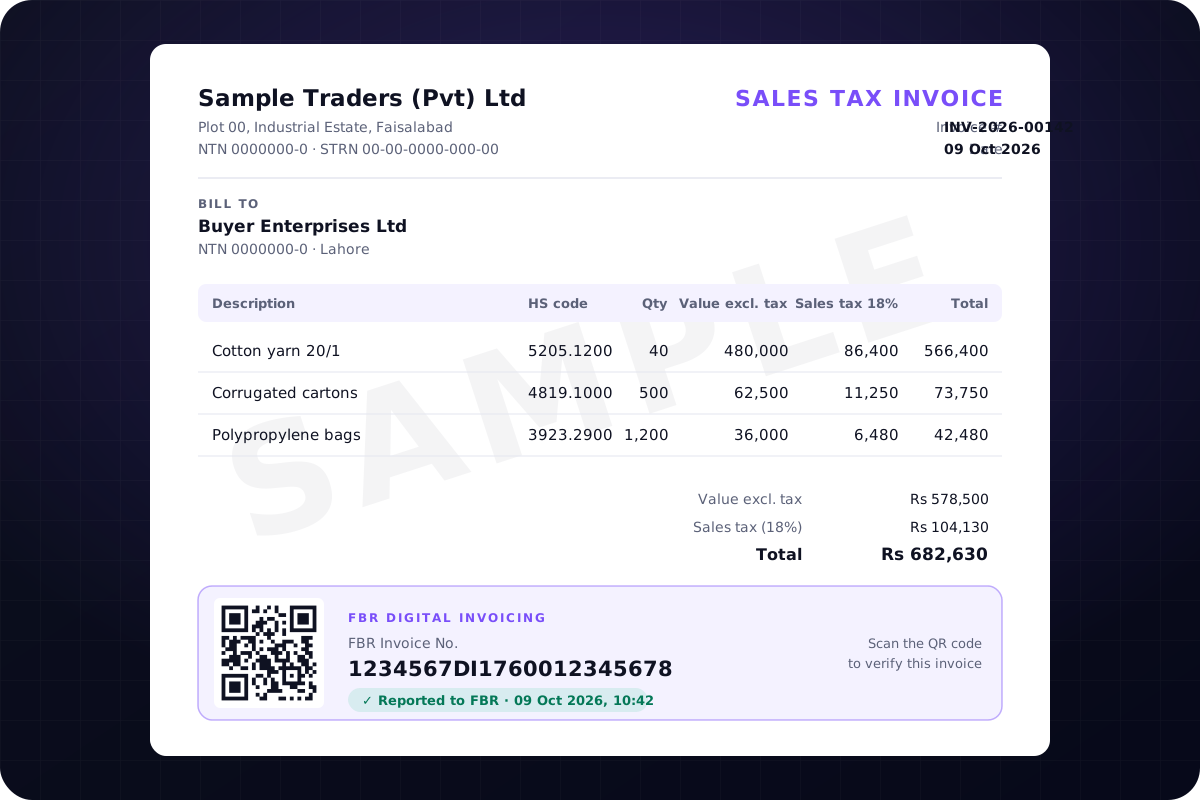
An FBR-compliant sales tax invoice, every time
Every invoice carries what FBR and your buyer need to see: seller and buyer NTN and STRN, HS codes, value excluding tax and sales tax per line - and, once FBR accepts it, the FBR invoice number and a QR code anyone can scan to verify it.
- FBR invoice number printed on every accepted invoice
- QR code your buyer or FBR can scan to verify
- HS code, rate and sales tax shown line by line
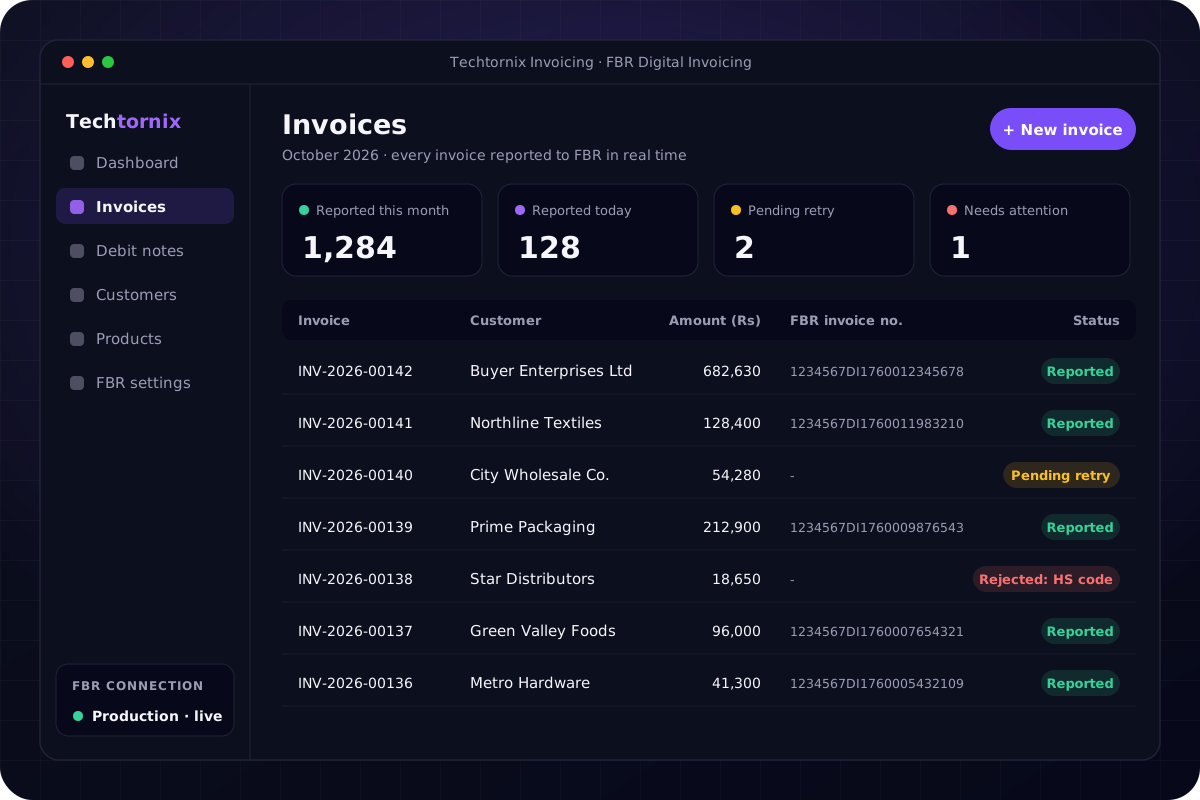
See the FBR status of every invoice at a glance
One screen shows which invoices FBR has accepted, which are waiting to retry and which need a correction - with the reason in plain language. Search, reprint and export without asking anyone to dig through FBR's portal.
- Reported, pending and rejected invoices, side by side
- Rejection reasons in plain language, ready to fix
- Live FBR connection status for sandbox and production
What you get
Direct FBR API integration
Your ERP, POS or billing software connected to FBR's Digital Invoicing API, so invoices are validated and posted automatically - no portal, no second entry.
FBR invoice number and QR code
Each accepted invoice comes back with its FBR invoice number, printed with the QR code on the invoice your customer receives so it can be verified.
Ready invoicing software
No ERP to connect? Our web-based software issues FBR-integrated sales tax invoices and debit notes, with customer and product records, from day one.
Product and tax mapping
Your items mapped to HS codes, units of measure, sale types and applicable rates or SRO references from FBR's reference data, so invoices aren't rejected on a code.
Sandbox testing to production
We run the scenarios FBR requires in its sandbox, then move you to the production token - with IP whitelisting and secure token storage handled.
Rejections handled, nothing lost
Errors are shown in plain language while the invoice can still be corrected, and failed posts are retried and flagged rather than silently dropped.
- Real-time invoice reporting to FBR
- FBR invoice number and QR code on every invoice
- Integration with your ERP, POS or accounting software
- Ready web-based invoicing software
- HS code, UoM, sale type and rate mapping
- Sandbox scenario testing and production go-live
How we work
Compliance and systems review
We look at how you invoice today - which system, which sale types, which rates and SROs apply - and confirm your IRIS registration details for Digital Invoicing.
You get: An integration plan and fixed quote
Sandbox integration
Your system is connected to FBR's sandbox, products and customers are mapped, and every scenario that applies to your business is tested until it passes.
You get: All applicable sandbox scenarios passed
Production go-live
Once the production token is issued we switch over, issue the first live invoices with you, and check them against FBR's records and your printed format.
You get: Live, FBR-reported invoices
Support and updates
FBR revises its API, reference data and rules. We keep the integration current and train your staff on handling rejections and debit notes.
You get: A maintained integration and a trained team
Results our clients see
- Automatic - Reporting from the system you bill in
- Real-time - FBR invoice number on issue
- Traceable - Every invoice matched to its FBR record
Software for sales tax registered businesses in Pakistan that issues invoices through FBR's Digital Invoicing system. Every invoice is validated and reported to FBR as it is created and comes back with its FBR invoice number and QR code - whether we connect the ERP, POS or accounting software you already use, or you invoice from our ready, web-based software.
Technologies we use
- FBR Digital Invoicing API
- IRIS
- REST / JSON
- Node.js
- React
- MySQL
- SQL Server
Frequently asked questions
What is FBR Digital Invoicing?
It is FBR's system for electronic sales tax invoicing. Instead of keeping invoices only in your own records, your invoicing software sends each invoice to FBR through an API as it is issued. FBR validates it and returns a unique FBR invoice number, which is printed on the invoice together with a QR code so the buyer - or FBR - can verify it.
Who has to use FBR Digital Invoicing?
FBR has been making digital invoicing mandatory for sales tax registered persons in phases, starting with corporate and larger businesses and extending to others. The deadlines and categories have been revised more than once, so check the latest FBR notification for your category - or ask us and we'll confirm where you stand during the free review.
Can you integrate our existing ERP or accounting software with FBR?
Yes, in most cases. If your ERP, POS or accounting system stores invoices in a database or exposes an API, we connect it to FBR so invoices are reported automatically when they're finalised - your team keeps working exactly as before. Where the software itself can't be changed, a small middleware service reads finalised invoices and posts them to FBR.
What if we don't have any invoicing software?
Then use ours. Our web-based invoicing software is FBR-integrated out of the box: add customers and products, issue sales tax invoices and debit notes, and print or email them with the FBR invoice number and QR code. It runs in a browser, so there is nothing to install.
What do we need from FBR to get started?
An active sales tax registration and access to your IRIS account. Through IRIS you register for Digital Invoicing, whitelist the IP address of the system that will send invoices, and receive the security token for sandbox testing - and, once testing is complete, the production token. We walk you through each step and handle the technical parts alongside your accountant.
How long does it take to go live?
With our ready software, usually a few days after FBR issues your production token. Integrating an existing ERP typically takes one to three weeks, most of which goes into mapping products and passing FBR's sandbox scenarios rather than coding. You get a written timeline before we start.
What happens if FBR rejects an invoice or its system is down?
Invoices are validated against FBR's rules before they're posted, so common errors - a wrong HS code or rate, or a missing buyer NTN - are caught while they can still be corrected. If FBR returns an error, the invoice is flagged with the reason in plain language. If FBR's service can't be reached, the invoice isn't lost: it is held and retried, and your team can see exactly which invoices are pending.
Which sale types and tax treatments are supported?
The ones in FBR's Digital Invoicing reference data that apply to your business - standard-rate, reduced-rate, exempt and zero-rated goods, third schedule goods, services and the other sale types FBR defines - each mapped to how you actually sell. Every applicable scenario is tested in FBR's sandbox before go-live.
Is our invoice data secure?
Invoices travel only between your system and FBR, over encrypted connections. Your FBR security token is stored encrypted on the server and never exposed in a browser, only whitelisted servers can post to FBR, and your data is never shared with anyone else.